 By
By 
How to Accurately Teach FAMs to Women with Irregular Cycles?
For over two decades in the sexual wellness space, specializing in fertility awareness, I've witnessed firsthand the profound impact that accurate, empathetic education can have on a woman's relationship with her body. Yet, I've also seen the widespread frustration and despair when standard fertility awareness methods (FAMs) advice falls short for those with irregular cycles. The common narrative often implies that FAMs are only for the 'textbook' 28-day cycle, leaving millions feeling excluded and disempowered.
The pain point is palpable: women with irregular cycles, whether due to PCOS, postpartum changes, stress, or simply natural variation, often feel that fertility awareness is an impossible dream. They struggle to identify ovulation, predict menstruation, or even understand their own unique hormonal rhythm, leading to anxiety, confusion, and a sense of being disconnected from their reproductive health. This challenge is precisely why the conventional approach to FAMs needs a significant overhaul for this specific demographic.
In this definitive guide, I will share my expert frameworks and actionable strategies on how to accurately teach FAMs to women with irregular cycles, transforming confusion into clarity. We'll explore specialized tracking techniques, pattern recognition skills, and a holistic perspective that empowers women to confidently navigate their unique cycles, whether for conception or contraception. Prepare to gain insights that will not only educate but also profoundly empower you and those you mentor.
The Core Challenge: Why Irregularity Complicates FAMs
Understanding why irregular cycles pose such a significant hurdle for traditional FAMs is the first step toward effective education. A "regular" cycle is often defined by consistent length and a predictable ovulation window, typically mid-cycle. However, for women with irregular cycles, this predictability is absent. Ovulation might occur late, early, or not at all in some cycles (anovulatory cycles), and the follicular phase (before ovulation) can vary wildly in length, making calendar-based predictions utterly useless.
The body's hormonal symphony, orchestrated by the hypothalamus, pituitary, and ovaries, can be influenced by myriad factors – stress, diet, exercise, sleep, underlying health conditions like thyroid disorders, or polycystic ovary syndrome (PCOS). These influences can disrupt the delicate balance required for a consistent ovulatory pattern. Teaching FAMs effectively in this context isn't about forcing a regular pattern; it's about interpreting the body's unique, often fluctuating, signals.
In my experience, the biggest mistake educators make with irregular cycles is trying to fit a square peg into a round hole. We must teach adaptability, not adherence to an idealized, non-existent rhythm.

Beyond the Calendar: Shifting the Paradigm for Irregular Cycles
For women with irregular cycles, the calendar is a poor predictor of fertility. Instead, the focus must shift entirely to real-time physiological signs. This paradigm shift is critical. We must move away from retrospective calculations and embrace the body's daily messages. This is where the three primary fertility signs become paramount, as they directly indicate current hormonal activity rather than relying on past patterns.
The goal is to empower women to become detectives of their own bodies, meticulously observing and charting these signs to identify fertile windows as they unfold, rather than attempting to forecast them. This approach builds resilience and self-trust, crucial for managing the uncertainty that irregular cycles can bring.
Understanding the Three Primary Fertility Signs
These three signs are the bedrock of all accurate FAMs, especially when cycles are irregular:
- Basal Body Temperature (BBT): This is your waking resting temperature. A sustained rise in BBT, typically 0.4-1.0°F (0.2-0.6°C), indicates that ovulation has likely occurred and progesterone levels have increased. For irregular cycles, the timing of this rise is unpredictable, but its occurrence is still a clear marker.
- Cervical Mucus (CM): Often considered the most reliable primary sign, CM changes indicate estrogen levels. As ovulation approaches, CM typically becomes increasingly clear, stretchy, and slippery, resembling raw egg white. This "fertile quality" mucus is essential for sperm survival and transport. Its presence is a direct indicator of potential fertility, regardless of cycle day.
- Cervical Position (CP): The cervix undergoes changes throughout the cycle. During the infertile phase, it tends to be low, firm, and closed. As ovulation approaches, it typically becomes high, soft, and open. While more challenging to interpret for some, it provides valuable corroborating evidence.
Mastering Basal Body Temperature (BBT) with Irregularity
While BBT provides retrospective confirmation of ovulation, its accurate interpretation is vital for irregular cycles. The challenge lies in the unpredictable timing of the temperature shift. Consistency in measurement is non-negotiable.
Here’s how I advise women to master BBT tracking:
- Use a Basal Thermometer: Invest in a highly accurate basal thermometer (two decimal places). Digital thermometers that store previous readings are helpful.
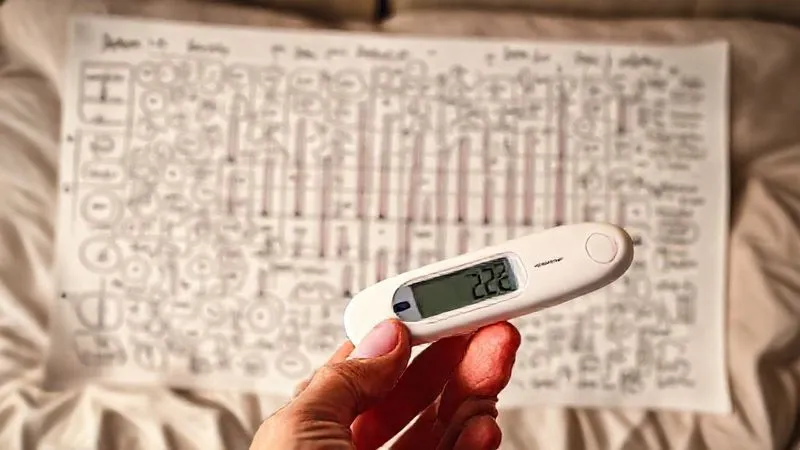
- Measure Consistently: Take your temperature at the exact same time every morning, immediately upon waking, before any activity (even getting out of bed or talking). Aim for at least 3-4 hours of uninterrupted sleep prior.
- Chart Diligently: Record your temperature daily on a paper chart or a dedicated FAM app. Look for a sustained temperature shift – three consecutive temperatures higher than the previous six, with the third being at least 0.2°F (0.1°C) above the coverline.
- Identify Disturbances: Be aware that factors like illness, alcohol, poor sleep, travel, or certain medications can affect BBT. Note these on your chart to avoid misinterpretation.
- Focus on the Shift, Not the Day: For irregular cycles, the day of the BBT shift is irrelevant; its occurrence signifies ovulation has passed. This helps define the post-ovulatory infertile window.
Decoding Cervical Mucus (CM): The Gold Standard for Irregular Cycles
In my professional opinion, cervical mucus observation is the single most crucial fertility sign for women with irregular cycles. Unlike BBT, which confirms ovulation after the fact, CM directly indicates the presence of estrogen and the potential for ovulation to occur. It provides real-time information about the fertile window's opening and peak.
CM changes are a direct response to rising estrogen. As estrogen levels increase, the cervix produces more mucus, and its quality changes from dry/sticky to creamy, then watery, and finally to clear, stretchy, "egg-white" quality (EWCM). This EWCM is highly fertile, designed to nourish and transport sperm.
Here's how to teach effective CM observation:
- Daily Observation: Encourage daily checks, multiple times a day if possible, especially when approaching the fertile window. Women can observe CM externally at the vulva, by wiping with toilet paper before and after urination, or internally with a clean finger.
- Focus on Sensation and Appearance: Teach women to note both the visual appearance (color, consistency) and the sensation at the vulva (dry, damp, wet, slippery). The "wet" and "slippery" sensations often precede the visual appearance of EWCM.
- Chart All Changes: Record all CM observations, no matter how subtle. Use descriptive terms (dry, sticky, creamy, watery, egg-white) and assign a "peak day" – the last day of fertile-quality mucus.
- Understand the "Dry Days" Rule: For irregular cycles, periods of dryness are particularly important. If a woman experiences several dry days, she can generally consider herself infertile until fertile mucus appears. However, vigilance is key, as fertile mucus can appear unexpectedly.
- Cross-Reference: While CM is powerful alone, encourage cross-referencing with other signs. If EWCM appears but BBT doesn't rise, it might indicate an attempted ovulation that failed, or a longer follicular phase.
Case Study: Sarah's Breakthrough with Cervical Mucus
Sarah, a 32-year-old client, came to me after years of frustration. Diagnosed with PCOS, her cycles ranged from 40 to 90 days, and she'd been told FAMs were "not for her." She desperately wanted to avoid hormonal birth control but felt lost. Her previous attempts at charting focused heavily on calendar predictions and inconsistent BBT. I shifted her focus entirely to cervical mucus. Initially, she struggled with identification, but with consistent daily observation and my detailed guidance, she began to recognize subtle shifts. After three months of diligent charting, she identified her first clear stretch of EWCM, followed by a BBT shift, indicating ovulation on cycle day 58. This was a revelation! By consistently tracking her CM, she gained a real-time understanding of her fertility, rather than waiting for a late period. This resulted in her feeling empowered, less anxious, and finally able to plan conception attempts with confidence, knowing exactly when her fertile window truly opened.
Cervical Position: An Often Underestimated Indicator
While sometimes challenging to learn, tracking cervical position (CP) can provide valuable corroborating evidence, especially for those with irregular cycles where other signs might be ambiguous. The cervix, the opening to the uterus, changes its texture, height, and openness in response to hormonal fluctuations.
Here’s how to teach self-examination for CP:
- Consistent Method: Instruct women to check their cervix at roughly the same time each day, after showering or bathing, using clean hands and fingers. A squatting or one-leg-up position can make it easier to reach.
- Feel for Three Qualities:
- Height: Is it low and easy to reach, or high and harder to reach? (High = more fertile)
- Firmness: Does it feel firm like the tip of your nose, or soft like your lips? (Soft = more fertile)
- Openness: Is the os (opening) closed, or slightly open? (Open = more fertile)
- Chart Consistently: Record observations daily, noting changes in height, firmness, and openness. A common pattern around ovulation is "SHOW" - Soft, High, Open, Wet (referring to accompanying CM).
- Understand Limitations: CP can be affected by arousal, recent intercourse, or even bladder fullness. It's often best used as a secondary sign to confirm what CM and BBT are indicating.
Integrating Technology and Expert Guidance: Tools for Success
In our modern world, technology can be a powerful ally in teaching and practicing FAMs, particularly for irregular cycles. While no app can replace accurate self-observation, many offer excellent charting capabilities and educational resources. However, it's crucial to select tools that support symptom-based methods and don't rely solely on predictive algorithms.
I always recommend a combination of a reliable basal thermometer (some even sync to apps) and a robust charting app that allows for detailed input of BBT, CM, CP, and other symptoms. The key is to use technology as a data aggregator and visualizer, not as a diviner of ovulation.
Here's a comparison of features to look for in FAM apps for irregular cycles:
| Feature | Benefit for Irregular Cycles |
|---|---|
| Manual Data Entry (BBT, CM, CP) | Allows precise, real-time input of physiological signs, crucial when predictions fail. |
| Customizable Symptom Tracking | Enables logging of other relevant symptoms (e.g., mood, energy, pain) that might correlate with hormonal shifts or underlying conditions. |
| Chart Overlays & Analysis Tools | Helps visualize patterns, identify sustained shifts, and cross-reference multiple signs over extended periods, even with fluctuating cycle lengths. |
| Educational Resources & Community | Provides learning materials and peer support, which can be invaluable for navigating the complexities of irregular cycles. |
| No AI Prediction Reliance | Avoids apps that primarily rely on algorithms to predict ovulation, as these are often inaccurate for irregular cycles. Focus on those that interpret raw data. |
Furthermore, seeking guidance from a certified Fertility Awareness Educator (FAE) is invaluable. An FAE can help interpret complex charts, troubleshoot challenges, and provide personalized support that no app can replicate. Research consistently shows that proper instruction significantly increases the effectiveness of FAMs.
The Power of Charting and Pattern Recognition: Finding Your Rhythm
Charting is more than just recording data; it's about creating a visual narrative of the body's daily changes. For irregular cycles, this narrative is often non-linear, but patterns still emerge. The goal is to identify recurring themes and unique rhythms, even if the timing varies.
Consistent, detailed charting over several cycles is paramount. It allows for the identification of a "personal baseline" for each sign and helps to distinguish fertile signs from non-fertile ones. Over time, women learn to recognize their own body's unique way of signaling impending ovulation, even if it happens on cycle day 20 one month and cycle day 50 the next.
Advanced Charting Techniques for Irregularity
- Cross-Checking Signs: Always compare BBT, CM, and CP. If CM suggests fertility but BBT hasn't risen, ovulation is likely still pending. If BBT has risen and CM is dry, ovulation has likely passed. Discrepancies warrant further observation.
- The "Fertile Window" vs. "Ovulation Day": Emphasize understanding the entire fertile window (sperm can live for up to 5 days, egg for 12-24 hours) rather than obsessing over the exact ovulation day. The fertile window opens with the appearance of fertile cervical mucus.
- Sustained Shifts: Look for sustained patterns rather than isolated data points. A single high temperature or a momentary patch of fertile mucus isn't enough to confirm a shift.
- The Coverline: For BBT, establishing a clear coverline (a horizontal line drawn on the chart to visually differentiate pre-ovulatory from post-ovulatory temperatures) helps identify the temperature shift, even if the pre-ovulatory temperatures are varied.
- Multiple Peak Days: In irregular cycles, it's possible to have multiple patches of fertile mucus or even multiple attempted ovulations before a successful one. Teach women to treat each fertile patch as potentially fertile until a clear BBT shift confirms ovulation.
Addressing Underlying Health Factors: A Holistic Approach
While FAMs can be successfully practiced with irregular cycles, it's crucial to acknowledge that persistent irregularity can sometimes be a symptom of an underlying health condition. As an educator, I emphasize the importance of a holistic view and encourage clients to consult with healthcare providers when necessary.
Common conditions associated with irregular cycles include:
- Polycystic Ovary Syndrome (PCOS): A hormonal disorder common among women of reproductive age.
- Thyroid Dysfunction: Both hyperthyroidism and hypothyroidism can affect menstrual regularity.
- High Stress Levels: Chronic stress can disrupt the hypothalamic-pituitary-ovarian (HPO) axis.
- Extreme Weight Fluctuations: Both being significantly underweight or overweight can impact cycles.
- Perimenopause: As women approach menopause, cycles naturally become irregular.
Understanding these potential factors not only aids in managing expectations but also empowers women to seek appropriate medical guidance. The American College of Obstetricians and Gynecologists (ACOG) provides extensive resources on abnormal uterine bleeding and irregular periods, emphasizing the importance of medical evaluation for persistent issues. My role is to teach the tools of observation, but a medical professional is key for diagnosis and treatment of underlying conditions.
Empowering Education: My Mentoring Philosophy for Teaching FAMs to Women with Irregular Cycles
Teaching FAMs to women with irregular cycles is as much about education as it is about empowerment. It requires patience, empathy, and a deep understanding of individual variations. I've found that adopting a mentoring philosophy, rather than a prescriptive one, yields the best results.
The most profound lesson I impart is that irregular cycles are not a flaw, but a unique rhythm. Our role as educators is to provide the tools to understand that rhythm, not to force it into conformity.
This means fostering a safe space for questions, acknowledging frustrations, and celebrating small victories. It involves reassuring women that learning their unique cycle takes time and practice, often several months, to build confidence in interpreting their signs. Effective patient education, as highlighted in numerous studies, is built on clear communication, active listening, and a collaborative approach.
Frequently Asked Questions (FAQ)
Q: Can FAMs truly work with PCOS? Absolutely, yes! While PCOS often causes significant cycle irregularity, FAMs, particularly those emphasizing cervical mucus and BBT, are highly effective. The key is to focus on real-time body signs rather than cycle day predictions, as ovulation can occur at highly variable times or even be attempted multiple times before success. Patience and diligent charting are crucial.
Q: How long does it take to learn FAMs with irregular cycles? It typically takes longer than for someone with a regular cycle. While basic observation can be learned in a cycle or two, truly understanding and gaining confidence in charting irregular cycles often requires 3-6 months of consistent practice under the guidance of a skilled instructor. The learning curve is steeper, but the reward of self-knowledge is immense.
Q: What if I don't see clear ovulation signs? It's not uncommon, especially initially or if anovulatory cycles occur. If you consistently don't see clear fertile mucus or a sustained BBT shift over several cycles, it's wise to consult a healthcare provider to investigate potential underlying issues. However, often with more diligent observation or expert guidance, subtle signs become apparent. Sometimes, a cycle simply doesn't result in ovulation, and FAMs help you identify that too.
Q: Should I combine FAMs with other methods for contraception? For women with irregular cycles using FAMs for contraception, pairing it with a barrier method (like condoms) during potentially fertile periods, especially during the learning phase or when signs are ambiguous, can provide an extra layer of security. Once confidence in identifying infertile windows is established, many feel comfortable relying solely on FAMs. Always discuss with a healthcare provider if you have concerns.
Q: Are there specific FAM methods better for irregular cycles? Methods that are entirely symptom-based are best. The Sympto-Thermal Method (STM), which combines BBT and cervical mucus (and often cervical position), is highly recommended as it uses multiple cross-checking signs. The Billings Ovulation Method (BOM) or Creighton Model (both focused solely on cervical mucus) are also very effective, as CM is a real-time indicator. Calendar-based methods should be avoided entirely for irregular cycles.
Key Takeaways and Final Thoughts
Teaching how to accurately teach FAMs to women with irregular cycles is not just about imparting knowledge; it's about fostering a profound connection between a woman and her body. It requires a shift from rigid rules to flexible, empathetic guidance, focusing on real-time physiological signs over calendar predictions. The journey may be more nuanced, but the destination—empowered self-knowledge—is incredibly rewarding.
- Prioritize symptom-based observation: Cervical Mucus, Basal Body Temperature, and Cervical Position are your guides.
- Emphasize consistent and diligent charting to identify unique personal patterns, not idealized ones.
- Utilize technology wisely as a charting tool, not a predictive oracle.
- Encourage a holistic approach, addressing potential underlying health factors.
- Adopt a mentoring philosophy: patience, empathy, and personalized support are paramount.
By embracing these principles, educators can transform the daunting task of fertility awareness for irregular cycles into an accessible and empowering journey. It's about giving women the tools to understand their unique body language, fostering autonomy, and cultivating a deep sense of trust in their own biology. Continue to learn, continue to teach with compassion, and watch as women reclaim their reproductive narrative.
Recommended Reading
- Pediatric Pneumonia: 7 Steps to Quickly Differentiate Viral vs. Bacterial
- 7 Urgent Steps: Restore Natural Immunity After Chronic Illness
- 7 Proven Ways: Rapidly Boost Endothelial Function in Early Atherosclerosis
- 7 Safe Ways to Strengthen Frail Bones in Seniors & Prevent Falls
- 5 Pro Strategies: Taming IBS Flare-Ups in Crucial Client Meetings






0 Comentários: